Interview - Paula + Martha
KATE WOLLMAN-MAHAN

Dear friends,
I'm thrilled to bring you this Interview with Paula Caravelli of Paula + Martha, an art centered interior designer who has designed apartments for celebrity clients and renowned showhouses. Thank you to Paula and Martha for sharing your work and expertise. This interview was a lot of fun - hope you enjoy.
Now on to the market - a complicated market. Due to the lethal combination of higher rates, lower equity markets, and broad economic and political uncertainty, a lot of buyers and sellers are waiting on the sidelines.
Buyers:
Prices haven’t declined the way buyers hoped they would have - and we don’t expect them to, so if you find an opportunity be prepared to act. To quote our President, Fred Peters, “market timing is a tricky business for buyers AND agents.” New York City hasn’t had a major price appreciation in 6 + years. As the 2022 year end Olshan report shows, average $/SF of condos trading over $4M is now on par with 2016 pricing. But be prepared to be patient. The best deals can be found in some of the most luxurious coop buildings. An experienced broker who knows the coop approval process is critical to help you navigate this process.
Sellers:
Sellers are starting to trickle back into the market this month after months of low inventory. We are starting to see sellers who not only NEED to sell but WANT to sell, or they want to trade up. But pricing and condition of the property is critical and buyers willing to undertake a gut renovation in this post-Covid construction world are few and far between.
New York City is and has always been made up of niche markets. For example, in Carnegie Hill there is no meaningful change in supply of 2 bedroom coops from last year. But in the entire Upper East Side there is a 21% increase in supply of 2 bedroom coops from last year. This kind of data can help you decide when is the right time for you to act.
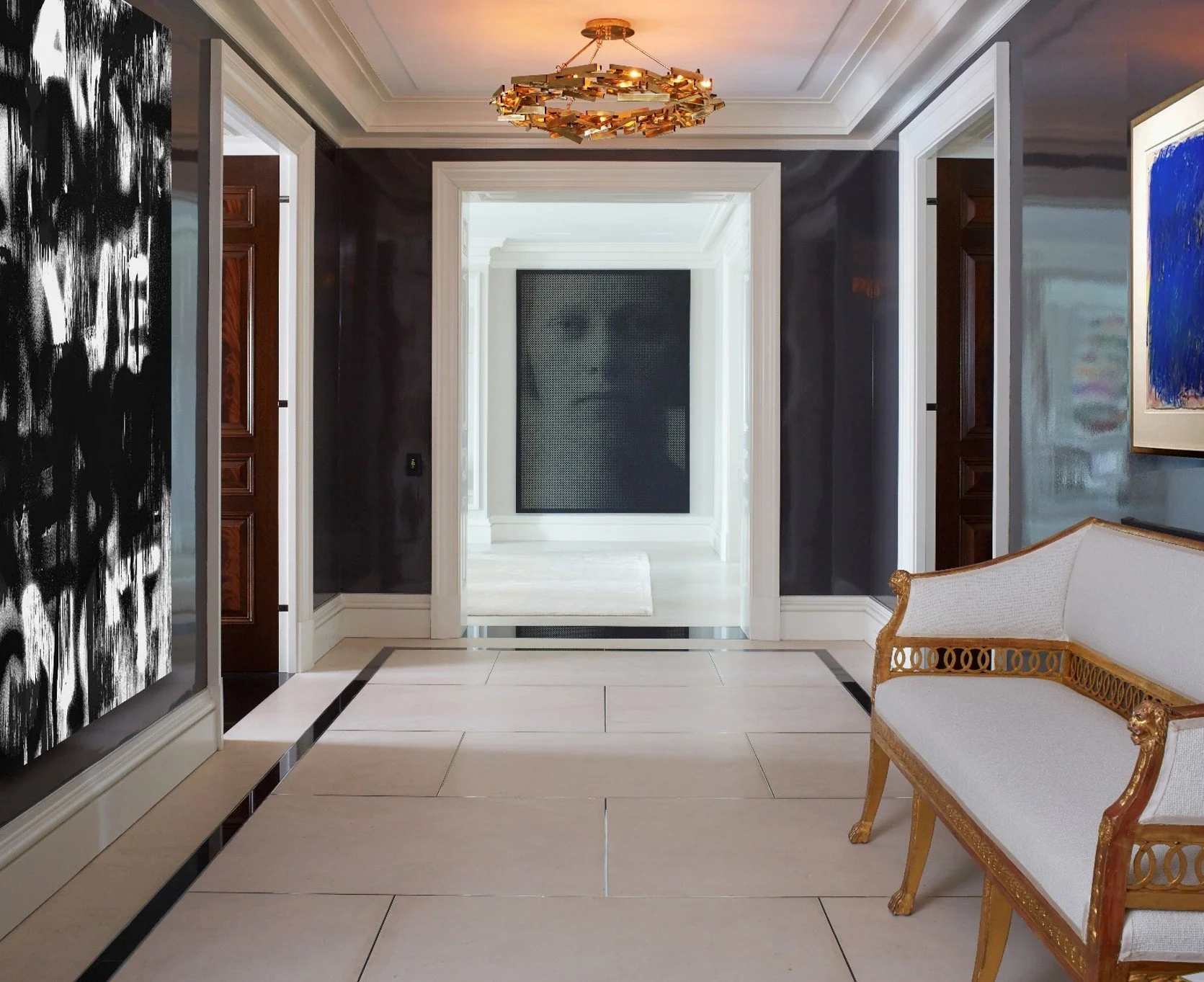
Deep lacquered walls and limestone floors create a gallery feel for this art filled space. Art ahead is the focal point.
You have an impressive expertise of art and consider the artwork as the starting point for each project. How do you design a room around the artwork?
Both Martha and I have degrees in fine art and are ‘painters at heart’, viewing each room as a blank canvas. Rather than adding art as a decorative element after the space is designed, we love building a design scheme around the art.
Art is often the focal point of our rooms. We pay special attention to properly lighting the art and allocate sufficient space to view and enjoy it. Finish materials are often kept neutral so as not to compete with the art. But neutral doesn’t have to mean white or beige. We sometimes use colors like bright blue or deep smoky brown to feature the art, or strong accent colors to complement the art. When an entire room is painted out in one color it can actually serve as a neutral backdrop for the artwork.
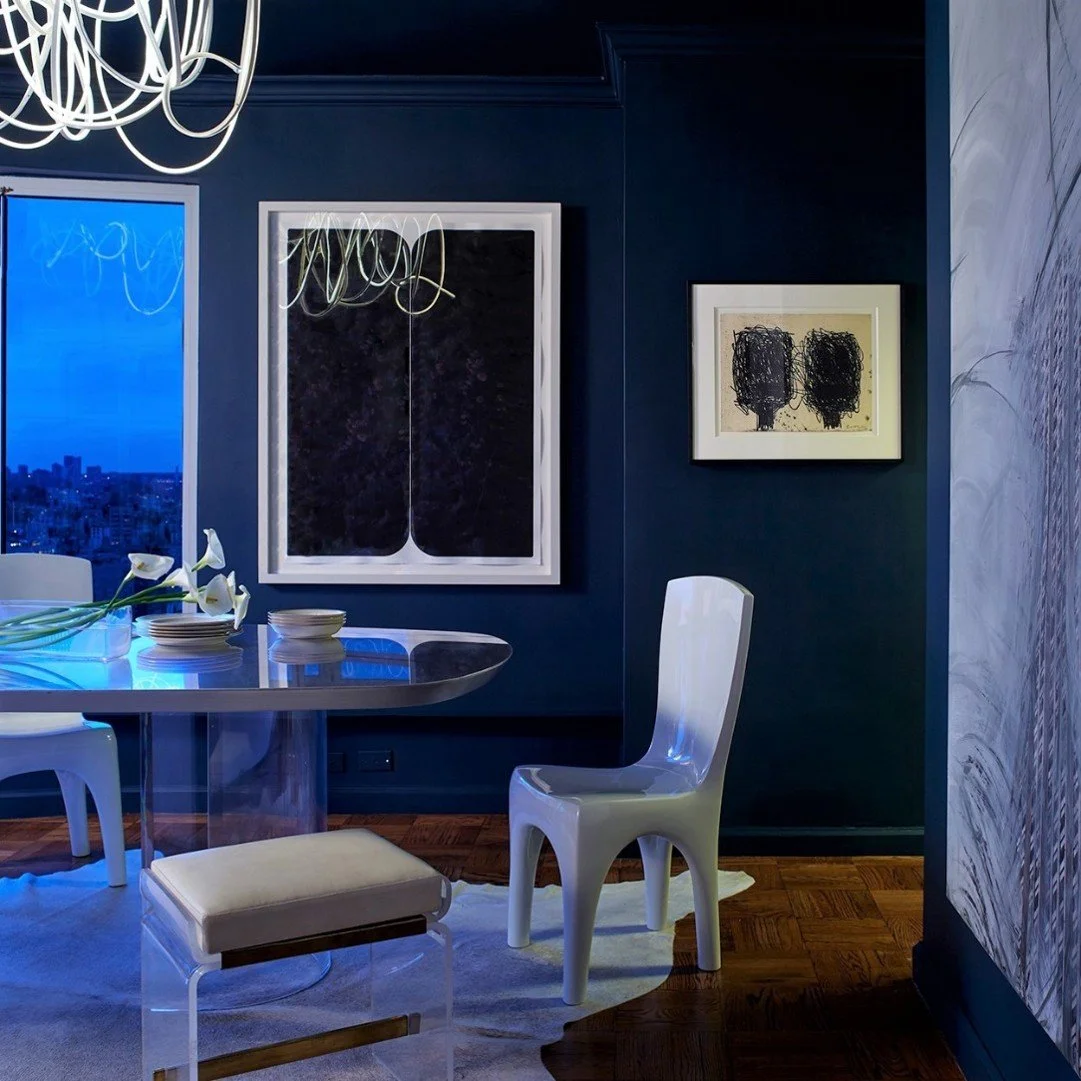
Works on paper by emerging artist, Sam Still (left), and blue-chip artist, Rashid Johnson (right), add interest to this dramatic dining room along with a Twombly-inspired LED ceiling pendant by Caravelli.
Can you suggest how to find art that is both a good investment yet still affordable?
When considering artwork for a space, we ask our clients to evaluate their objective. Do you want a decorative work that will bring pleasure, or to invest in something that may provide financial growth down the road? There’s no need to buy all art instantly- it’s really a process and should be enjoyed. We often recommend couples buy artwork to celebrate occasions. You probably have enough sweaters and handbags already and they only go out of style!
Blue-chip artists, found in major collections and museums, are out of budget range for many of us. They often gain considerably in value after the death of the artist so buying works early in their career provides steady growth and appreciation. Works on paper, even by blue chip artists, cost considerably less than paintings and can also do well as investments. These include prints, photography, and drawings. When buying prints, look for smaller editions and close to the edition date as they sometimes escalate in value quickly. One of a kind works on paper, like drawings or monoprints are more valuable than edition prints.
Emerging artists can provide excellent investment opportunities if you are lucky enough to catch a rising star early in their career. Since this can be challenging, focus on artists you love, rather than basing a purchase solely on resale potential. We recommend working with a qualified art consultant for education and direction and to avoid expensive mistakes. Art has been a strong long-term investment over the last two decades, and has increased steadily in value. Best of all, you get to enjoy it as it appreciates!
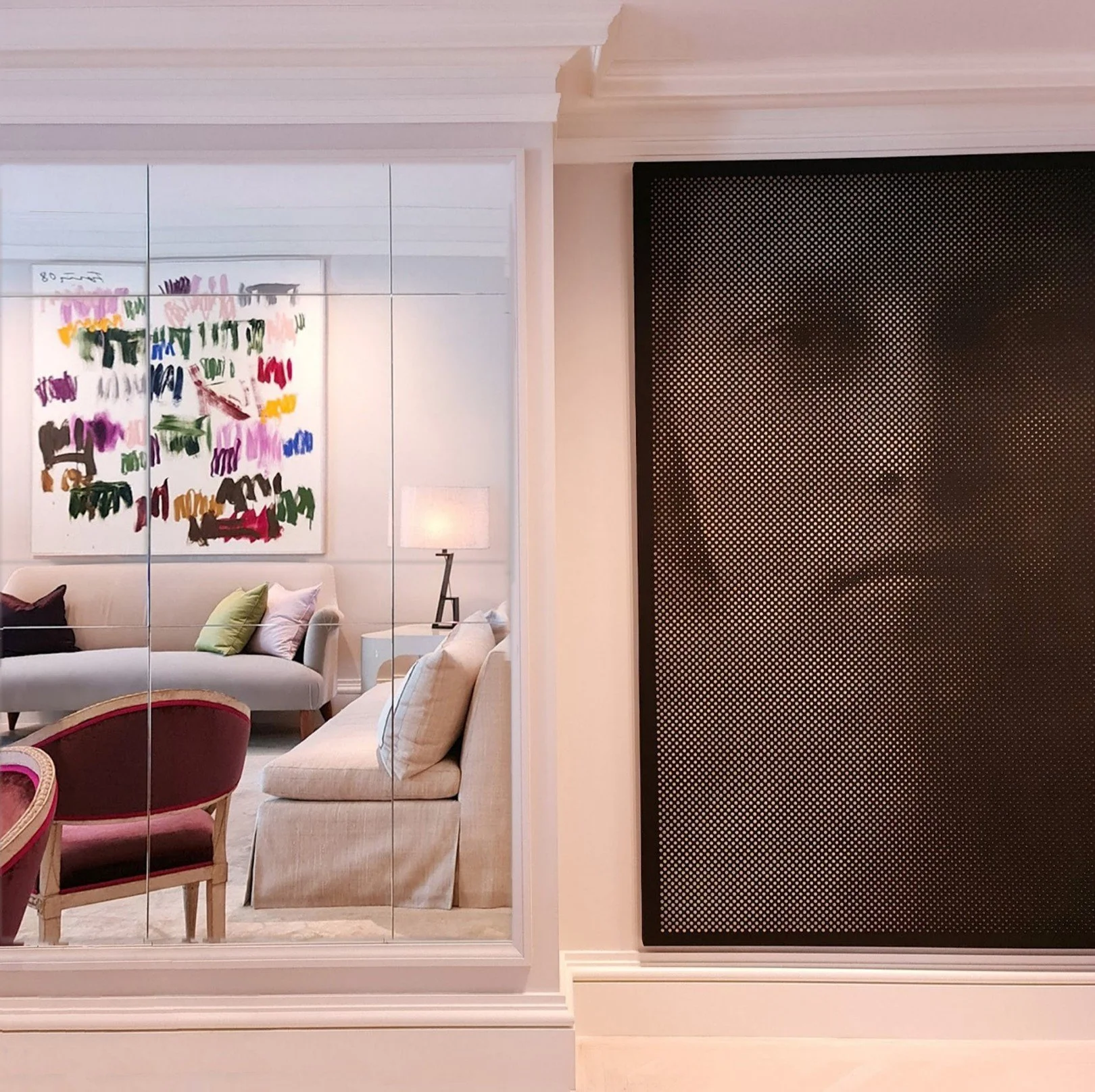
Gungher Förg painting (left) adjacent to the elegant Anne-Karin Furunes perforated canvas (right). Förg paintings have posted a surge of over 600% in the past two decades.
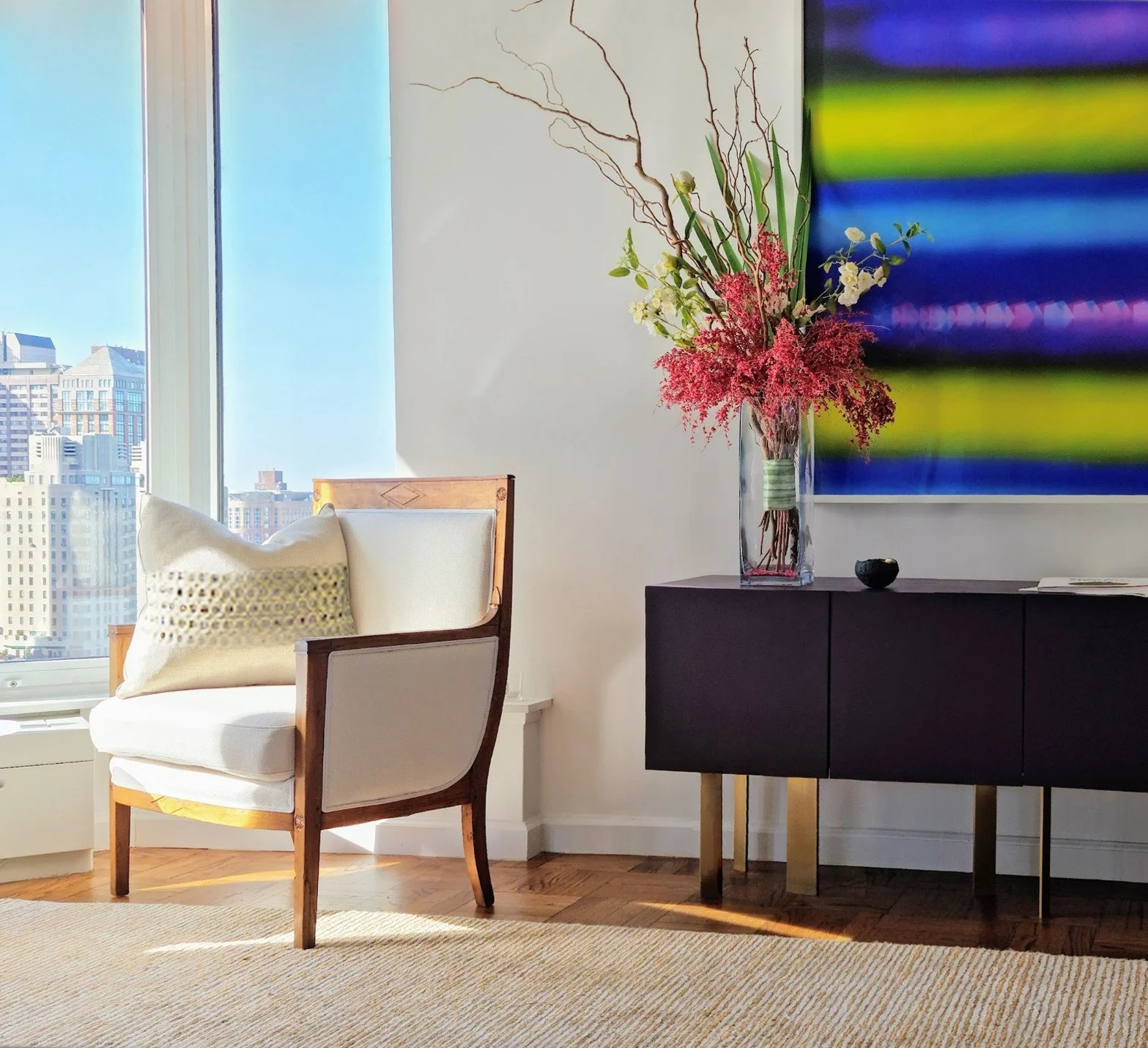
Color photography by emerging artist, Roman Scialom, brings a bolt of color to this otherwise neutral space designed to focus attention on stunning Central Park views.
You’ve designed apartments for clients such as Evelyn and Leonard Lauder and Ralph Lauren, but not everyone has their budgets. Any favorite sources for clients on a limited budget? Do you mix high and low and if so what is worth investing in?
Fine art and vintage furniture are a passion for us and we've been auction junkies for decades. We also love shopping at the Paris Flea Market (we love Paul Bert Market!) for fabulous one of a kind pieces that are more affordable, especially if you plan on being in Paris for inspiration!
We love mixing high and low for both art and decorative pieces. There are many online sources available for ‘bargains’ if you have a discerning eye. The juxtaposition of high and low can be quite exciting visually, as a good object is beautiful regardless of its pedigree.
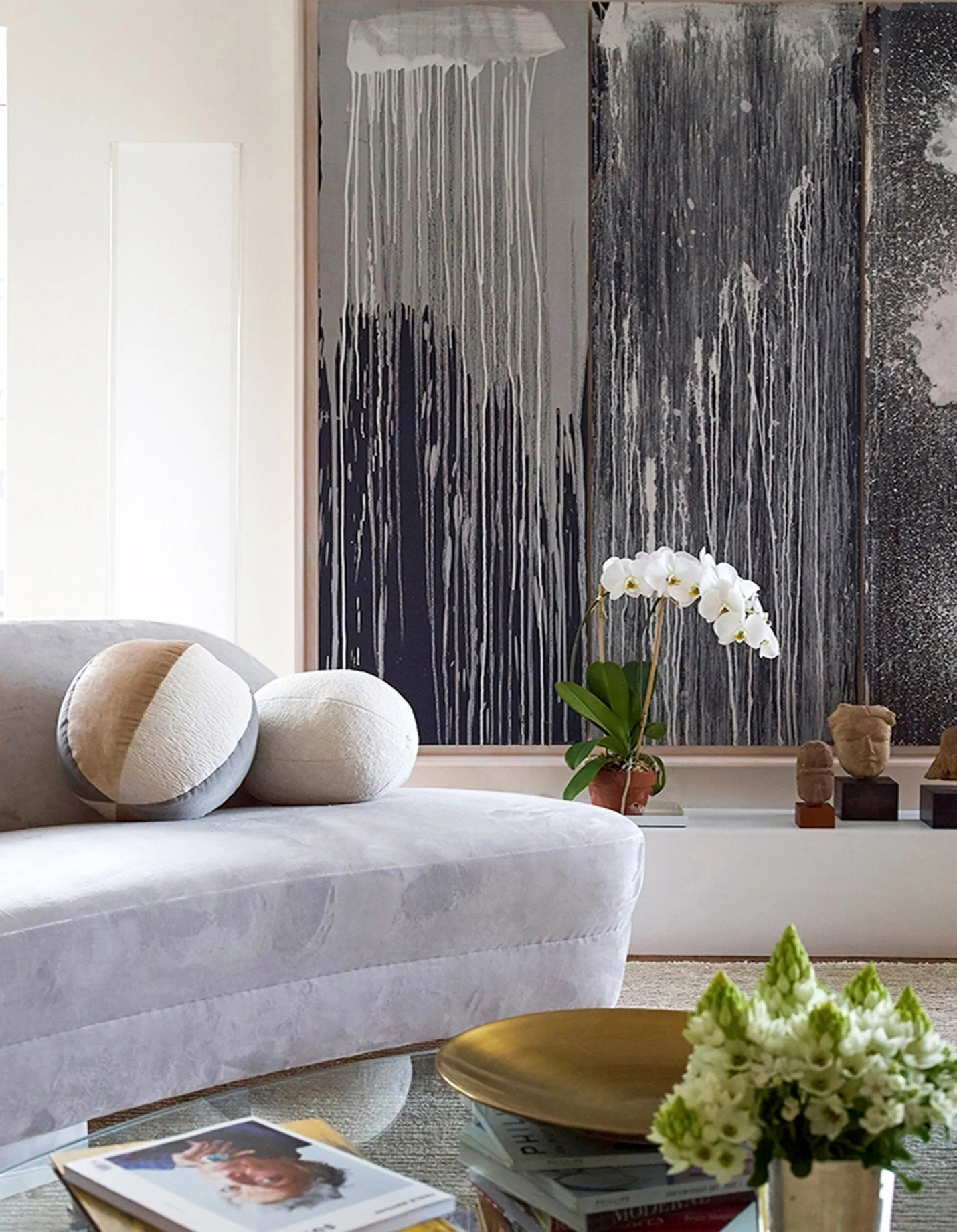
A large monoprint, by blue chip artist Pat Steir graces this Central Park living room.
Are people still buying antiques and do they retain their value?
Antiques come and go and currently they're blazing their way back in. They have personality that few current market products can ever give you. They interject interest into a space that makes it memorable! Antiques do go in and out of style but connoisseurs always keep them mixed with modern style.
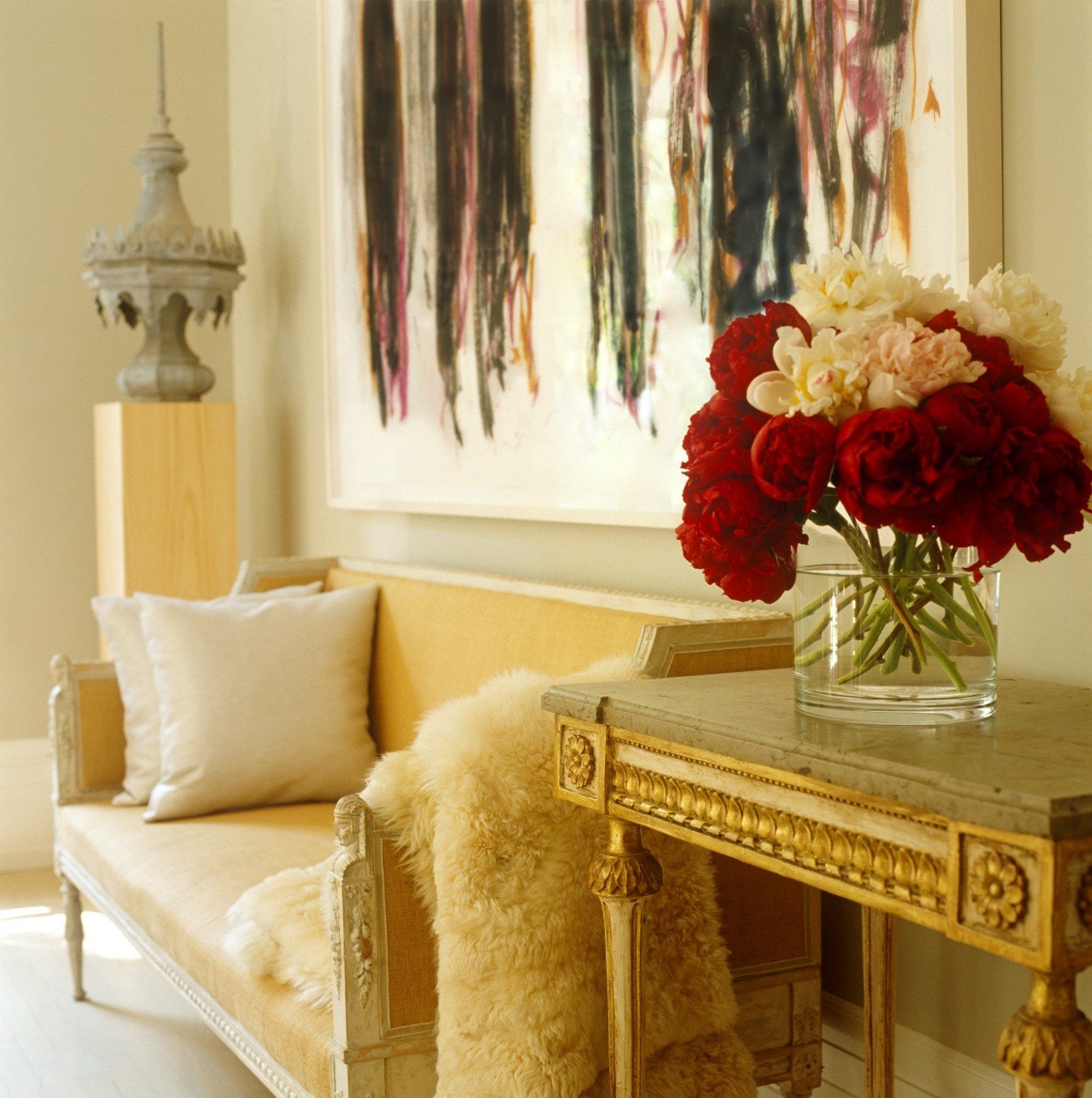
Joan Mitchell, Trees IV, lithograph. 2006 Works on paper by blue chip artists are more affordable and provide steady growth. Antique Swedish settee and zinc finial sourced from Paris Flea Market.
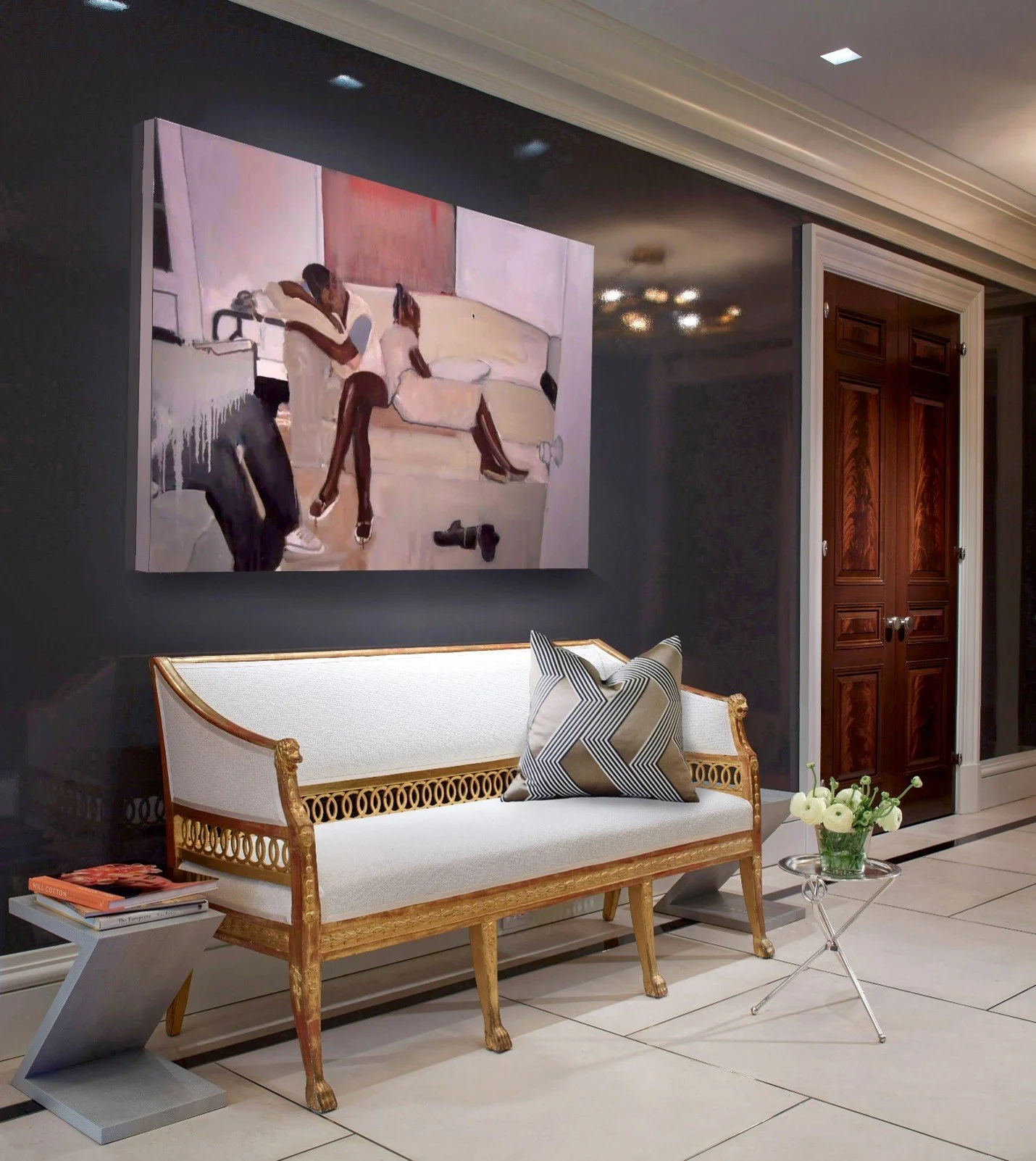
Painting by the late Noah Davis (added digitally) from David Zwirner Gallery complements an antique Swedish settee.
Half the apartments in New York are interior and have no view. Have you designed one of these apartments and do you have strategies to share, such as using artwork to create an interior view?
Interiors can be designed to be comfortable, elegant, highly functional, and heavenly-- even without a stellar view! There needs to be another focus in the space, like large scale artwork, or eye-catching furnishings. The creative use of lighting can transform a space, especially when there’s limited natural light. Even the best apartments with fabulous views have interior spaces without windows. There’s nothing like art to bring an interior space to life!
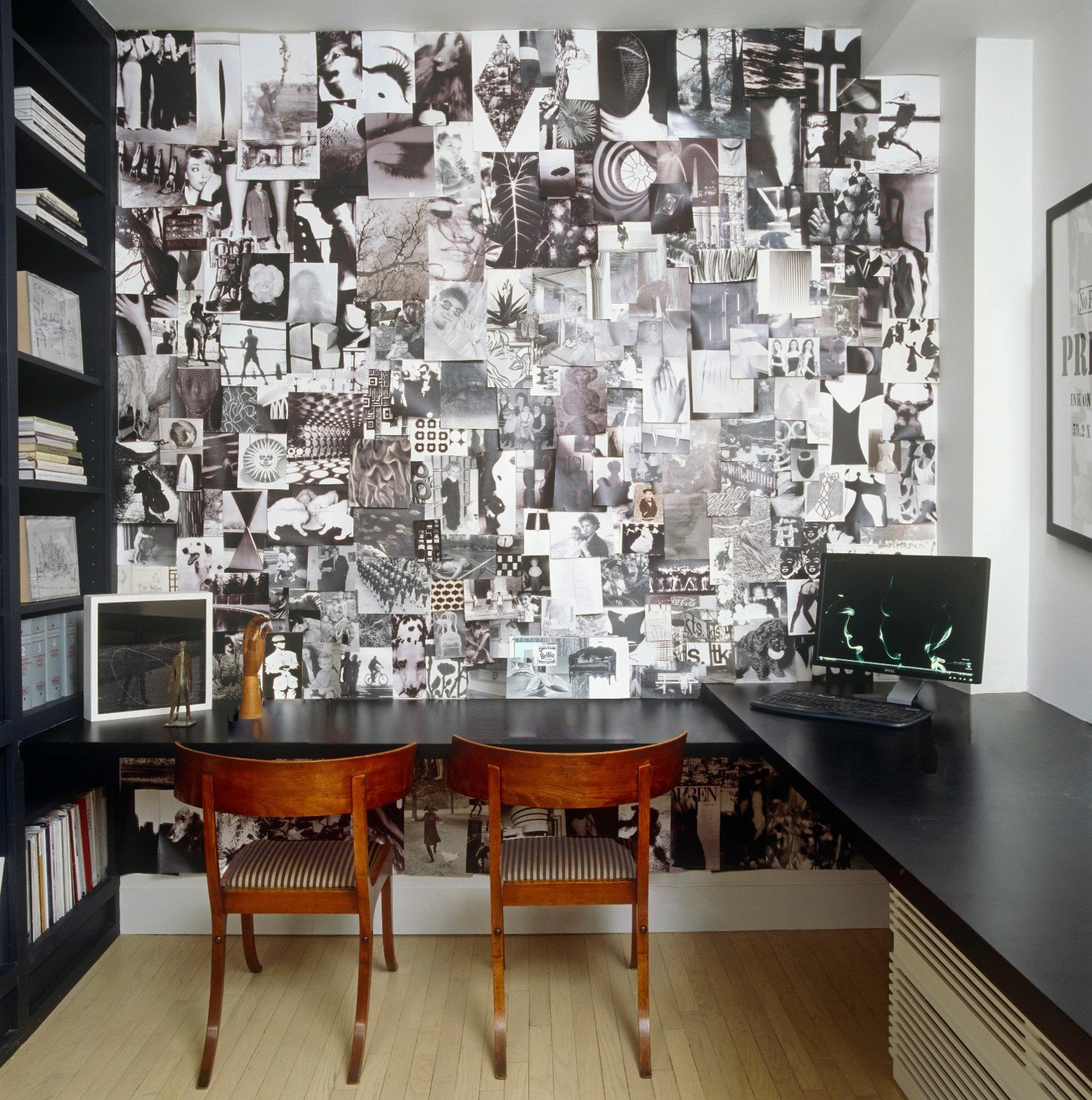
Home office with artful collage wall by Robert Greene attracts attention in a room without a view.
Any recommendations for owners of a postwar apartment with limited architectural detailing in the “bones”?
As an architectural interior designer, I love getting the ‘bones’ right before starting the decoration phase of a project. Only then can you add beautifully curated furnishings and art. Adding moldings is not necessarily the solution to postwar apartments, but if done in a way that defines the space, like defined transitions and full height doors, it can make a space appear more sophisticated and make the ceilings appear taller. If you’re renting, paint the walls and ceiling in the same tone to feature the artwork, like Martha did here!
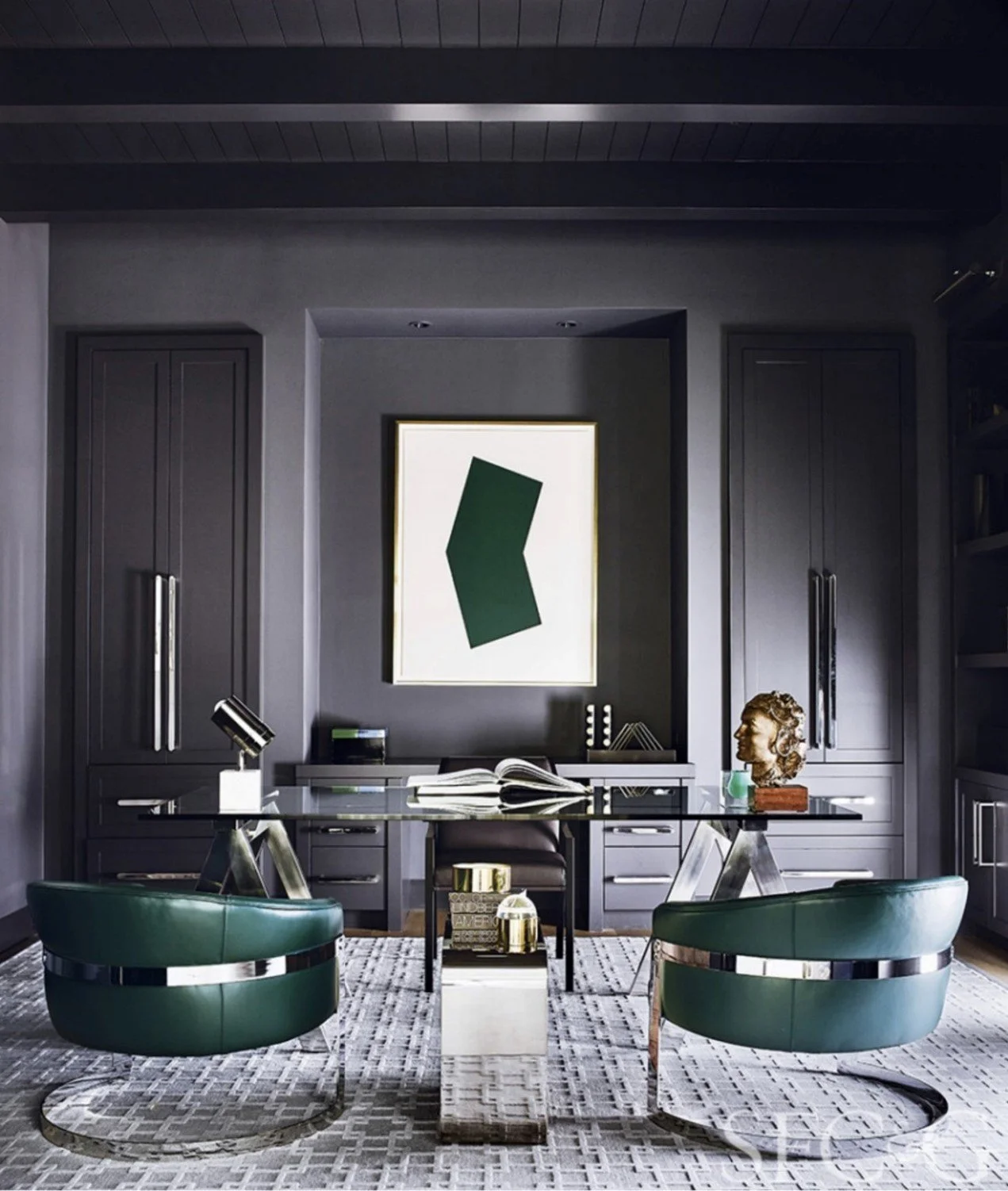
This dramatic home office includes a classic print by Ellsworth Kelly and a bronze sculpture (on desk) by Claude Lalanne from Almond & Co, SF.